“Commenti in descrizione” was conceived as a site-specific project, capable of functioning both as an installation activated by the public within the exhibition space and as an autonomous work through its photographic representation.
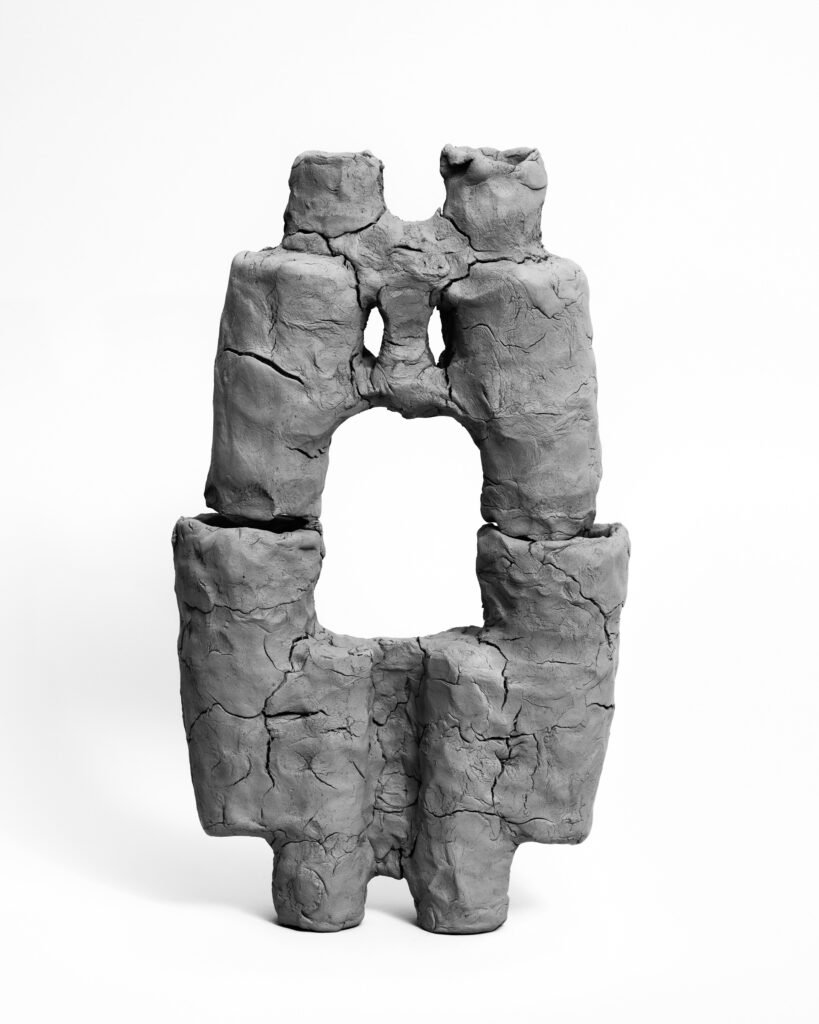
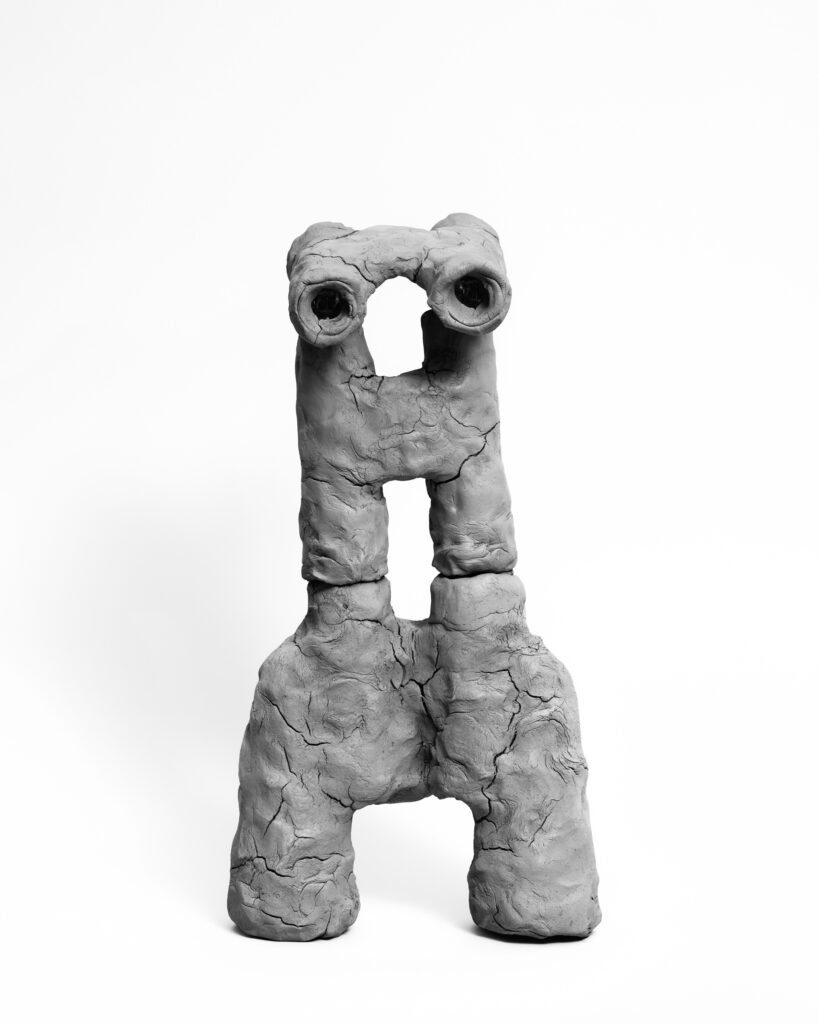
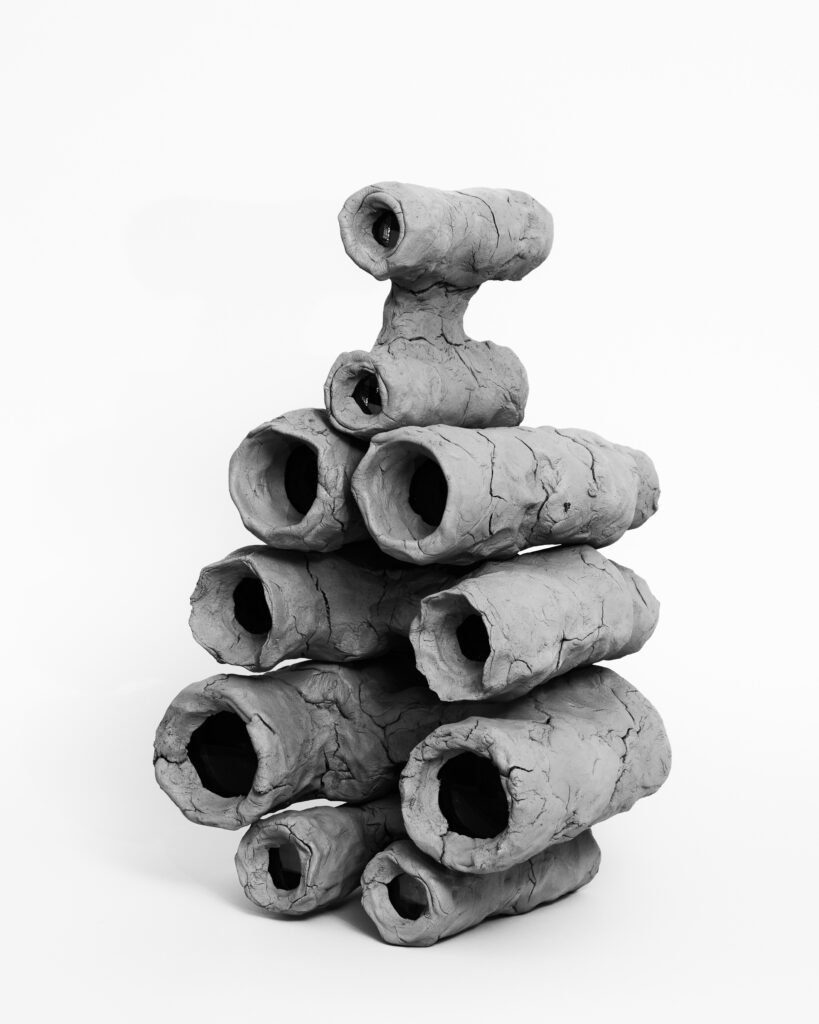
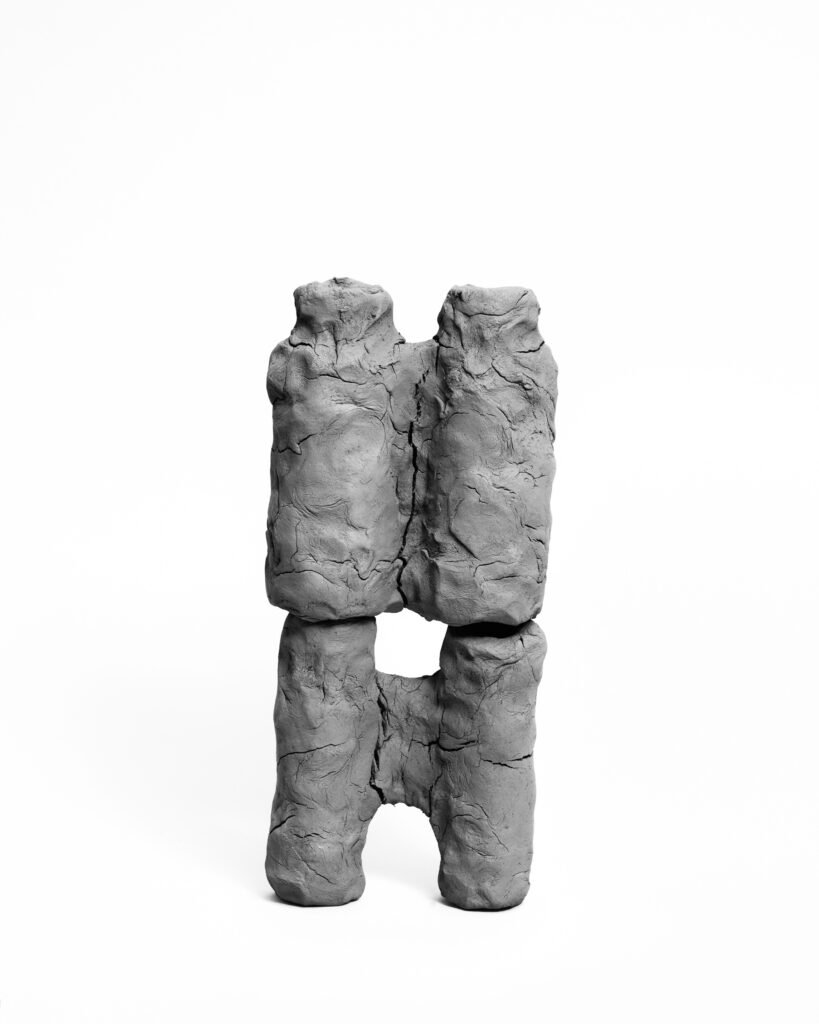
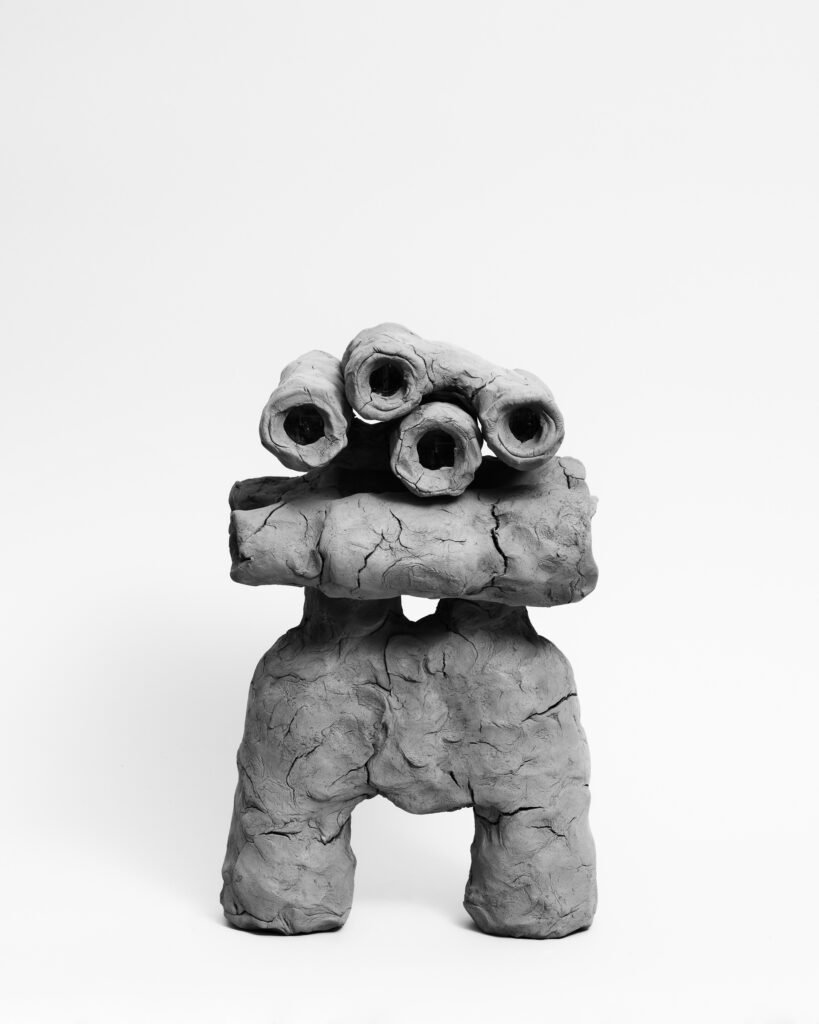
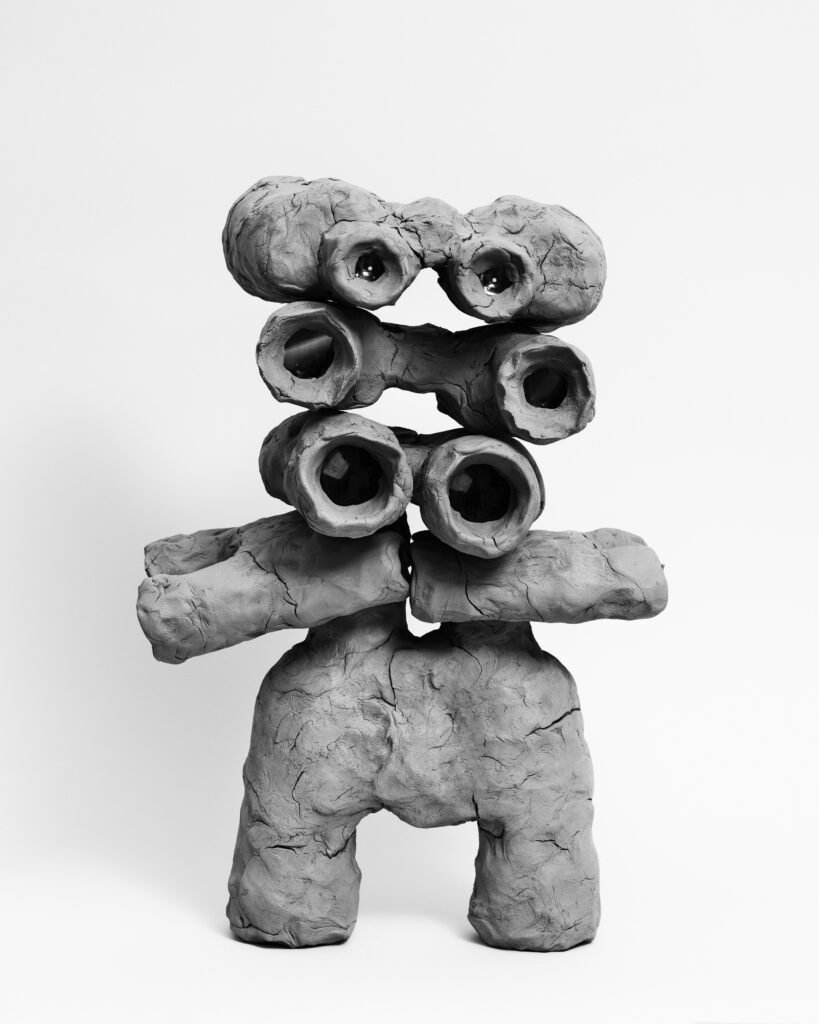
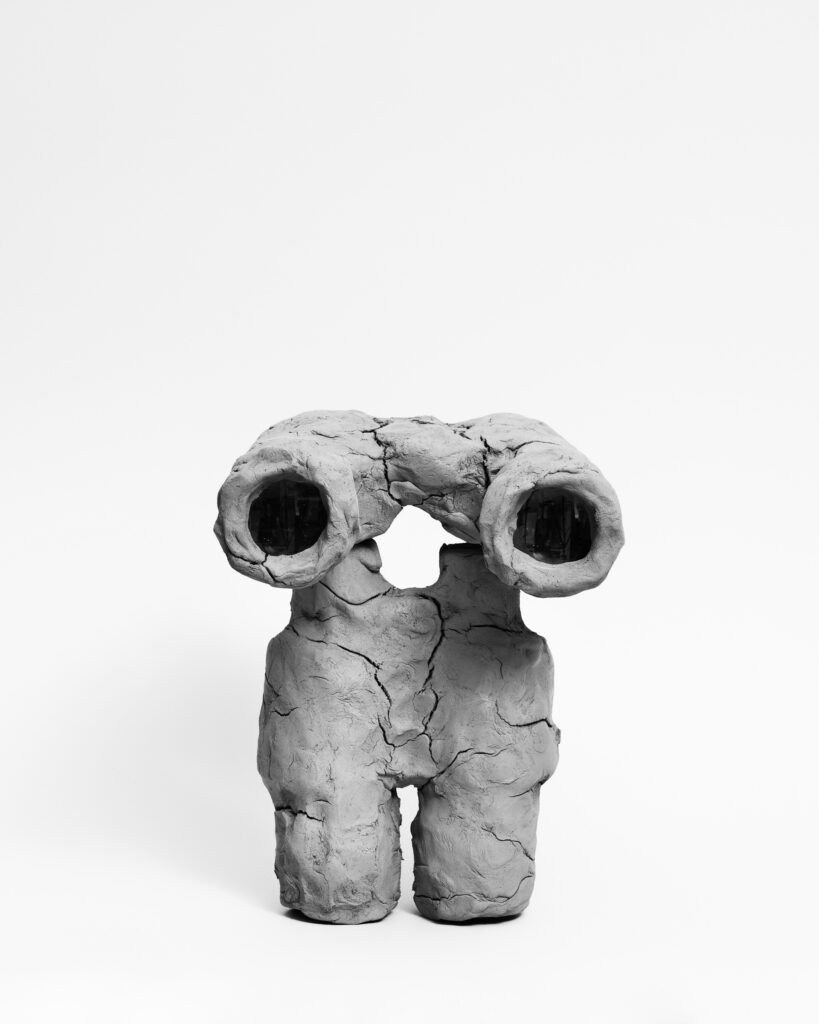
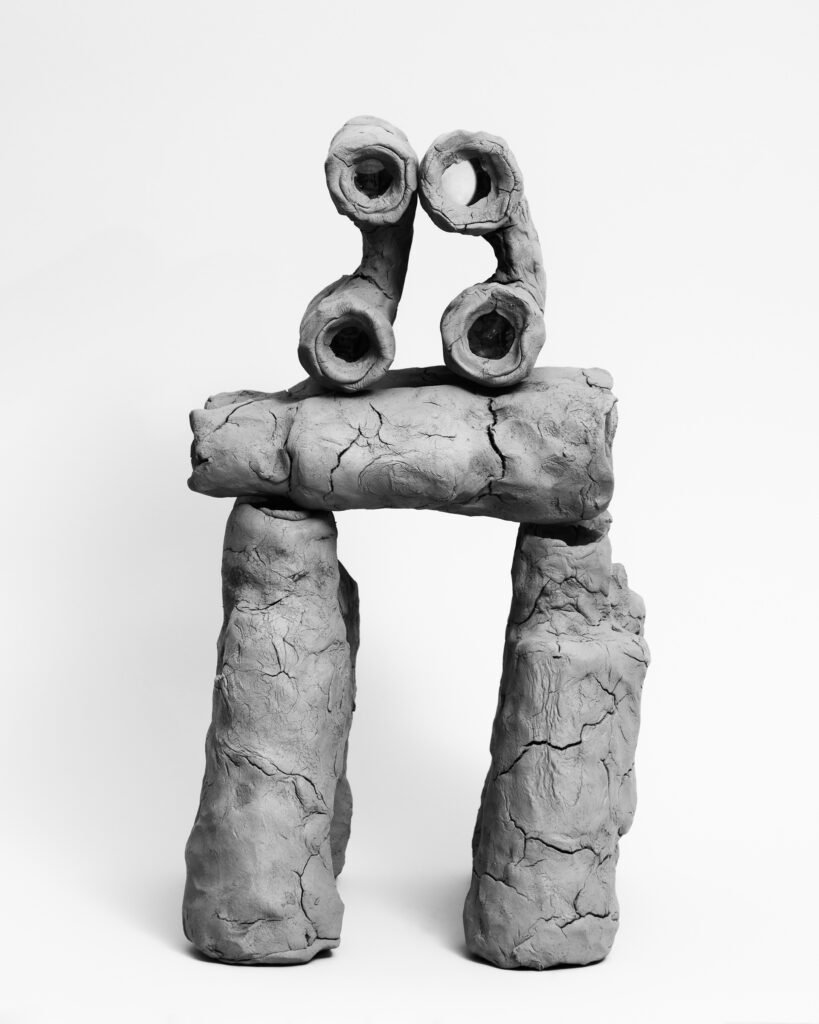
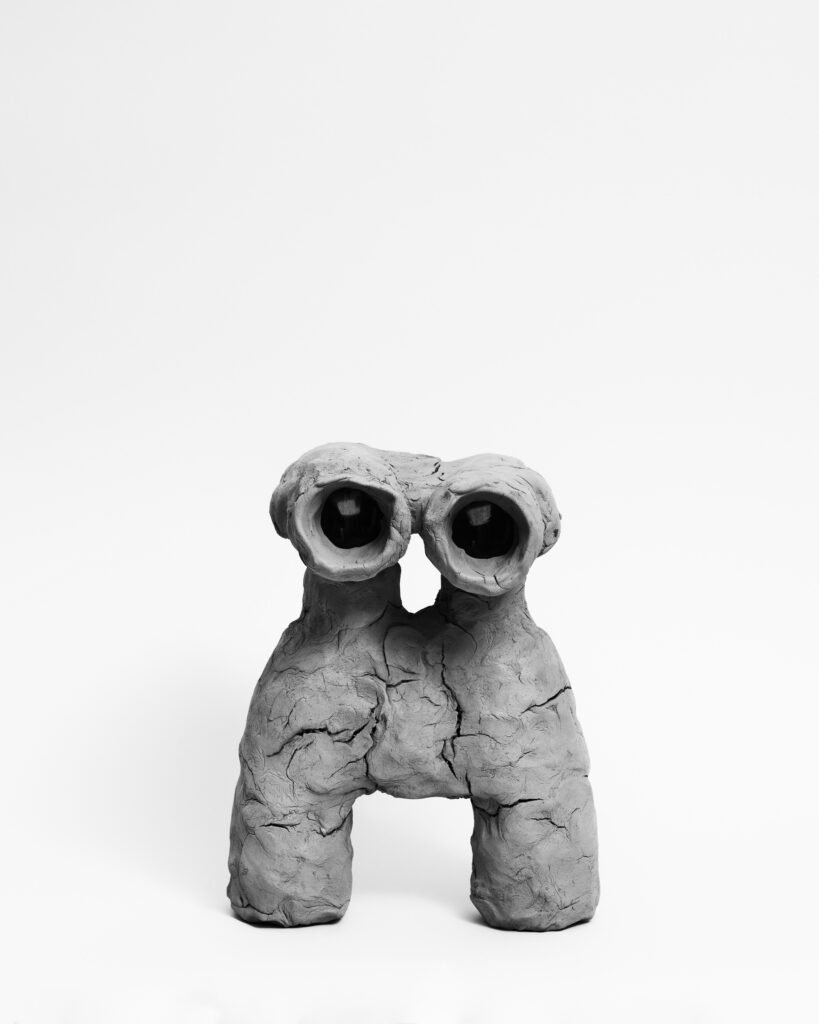
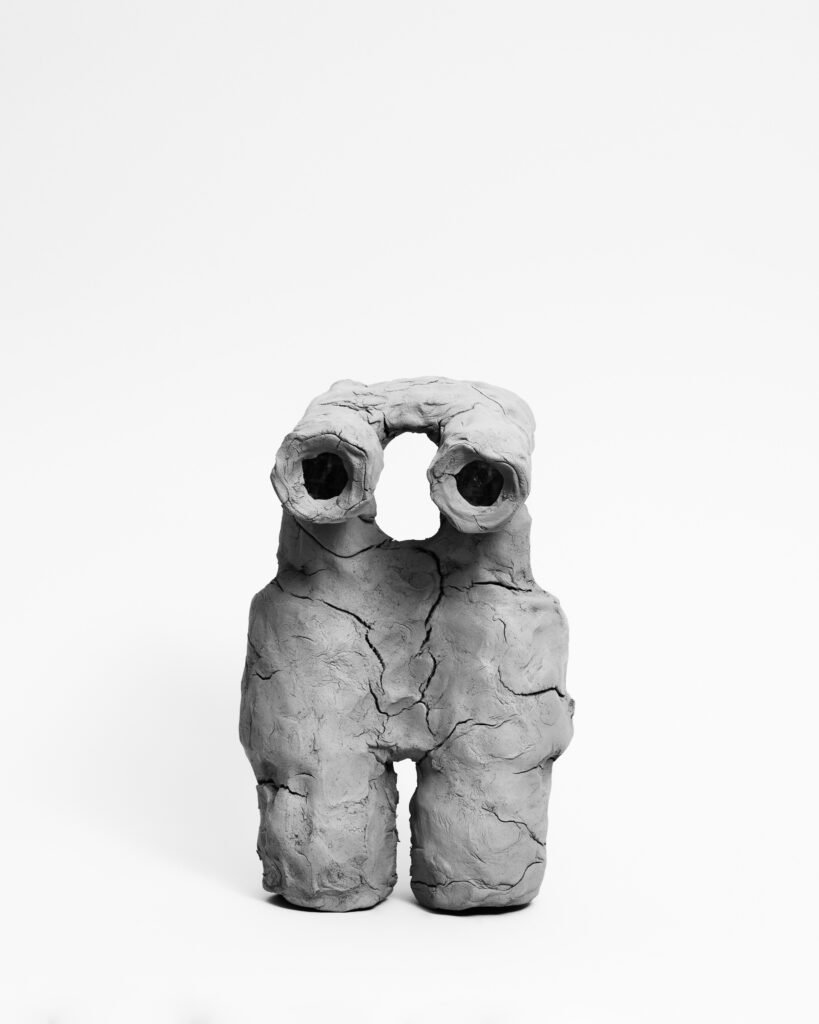
The work consists of actual binoculars coated in air-drying terracotta clay. Pre-existing devices are transformed into hybrid forms, somewhere between optical instruments and archaeological artefacts, in which their original function is suspended and rendered unstable.
The project continues a line of research begun in 2019–2020, involving cameras entirely encased in clay. Here, however, the shift is more radical: the focus is no longer on a metalinguistic approach to photography, but on the very mechanisms of looking and the devices that regulate vision. Rather than depriving an apparatus of its image-making function, the intervention concerns an instrument that remains usable, albeit in an altered form. The binoculars retain their ability to magnify the viewer’s gaze without producing images, shifting the emphasis from the act of recording to that of observing, even if under altered conditions, and projecting the viewer into an alternative scenario.
The installation is activated by the public. The binoculars can be used, but their use is conditioned by the exhibition space: a garage overlooking an interior wall of a residential courtyard.
This creates a paradoxical situation in which the instrument promises to extend the viewer’s gaze but offers only a restricted field of vision, shifting the focus from function to the conditions of seeing.
The title, Comments in the Description, evokes a form of language typical of social media: a promise of further explanation that often remains unfulfilled or inaccessible. In this sense, it also introduces an interactive dimension, in which the meaning of the work emerges through the relationship between the object, the viewer, and an expectation that remains unmet.
The photographic documentation of the objects is presented in black and white, accentuating the distance from the physical objects themselves (with their characteristic reddish-orange colour) and encouraging an ambiguous reading, somewhere between relics of an improbable past and artefacts from a dystopian future.
Ultimately, the project is no longer concerned with photography itself, but with the conditions of vision: the ways in which no device produces knowledge independently, but only within a context that determines its possibilities and limitations.